MAKING SENSE OF YOUR RESULTS
DNA Family History
Research & Match Analysis
DNA won't hand you a finished family tree on its own – but combined with traditional records, it can help identify family connections, support relationships and uncover clues that paper records alone can't.
I don't perform DNA tests - I help you understand the results you already have
DNA is one tool among many. It's powerful precisely because it doesn't work alone - it confirms what records suggest, and reveals where they've gone wrong.
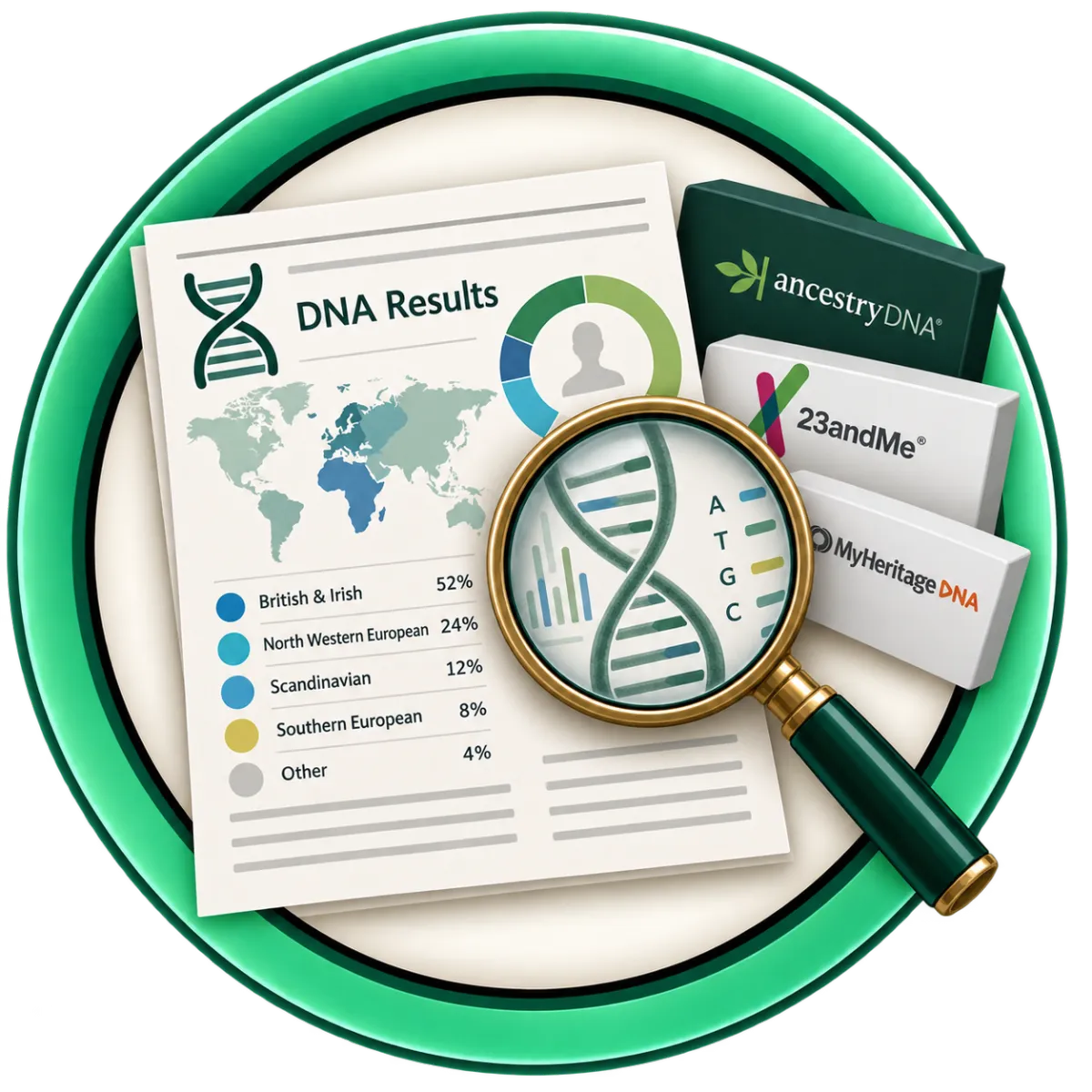
Reviewing existing DNA results
I'll review the DNA results you already have and explain what the information may mean for your research.
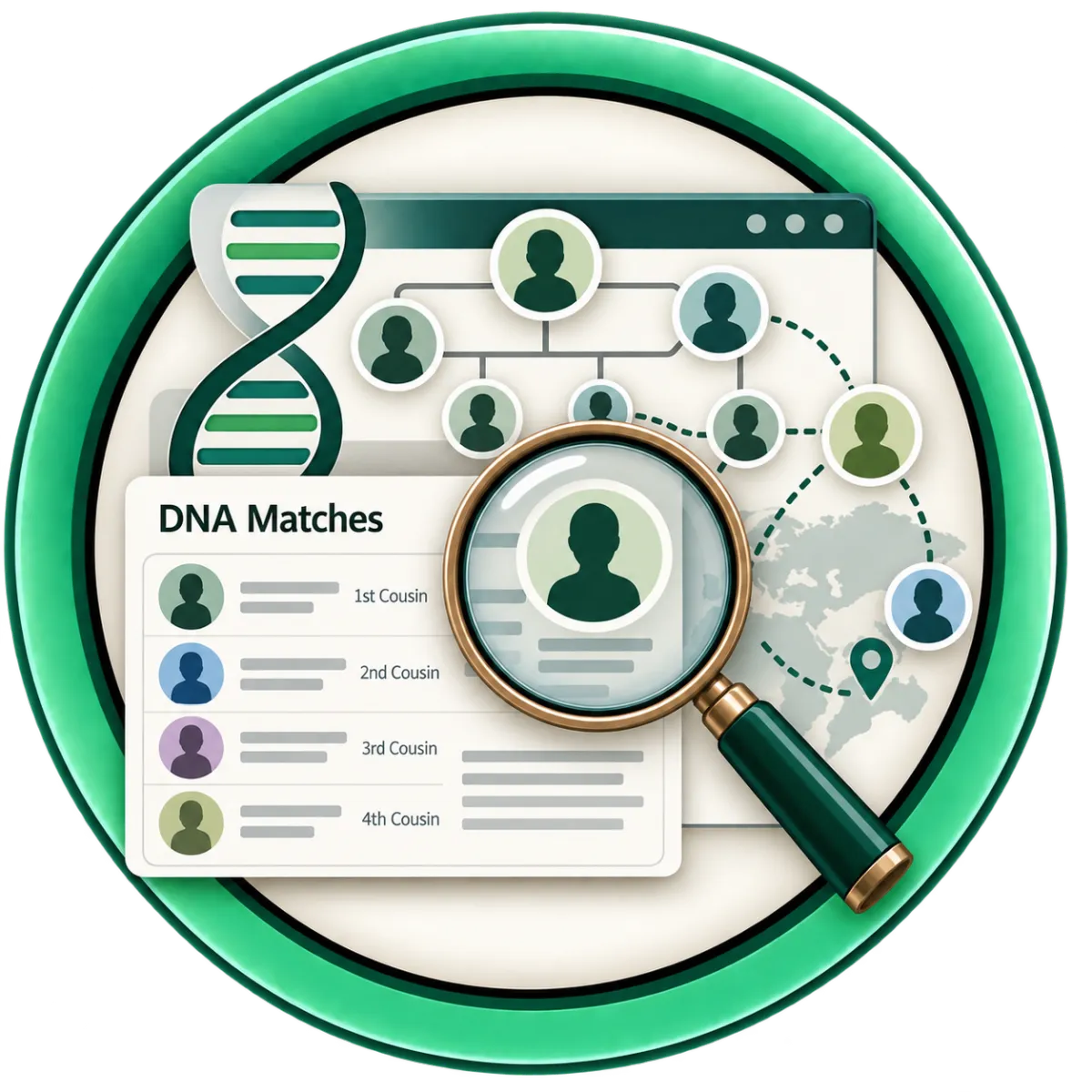
Analysing DNA matches
I'll examine your match list and look at how individual DNA matches may connect to your family.
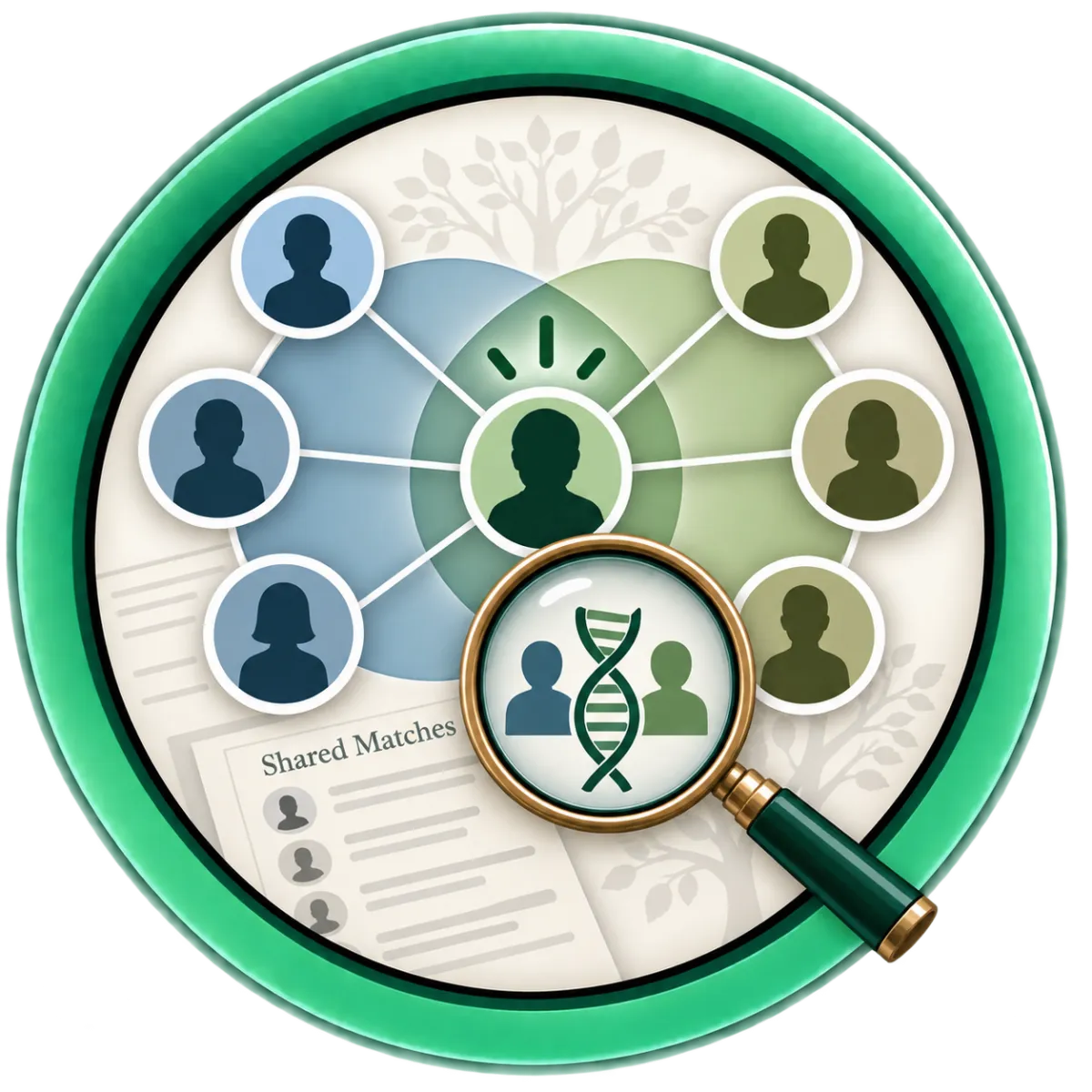
Identifying shared matches
Shared DNA matches can help identify groups of people who may descend from the same family line.
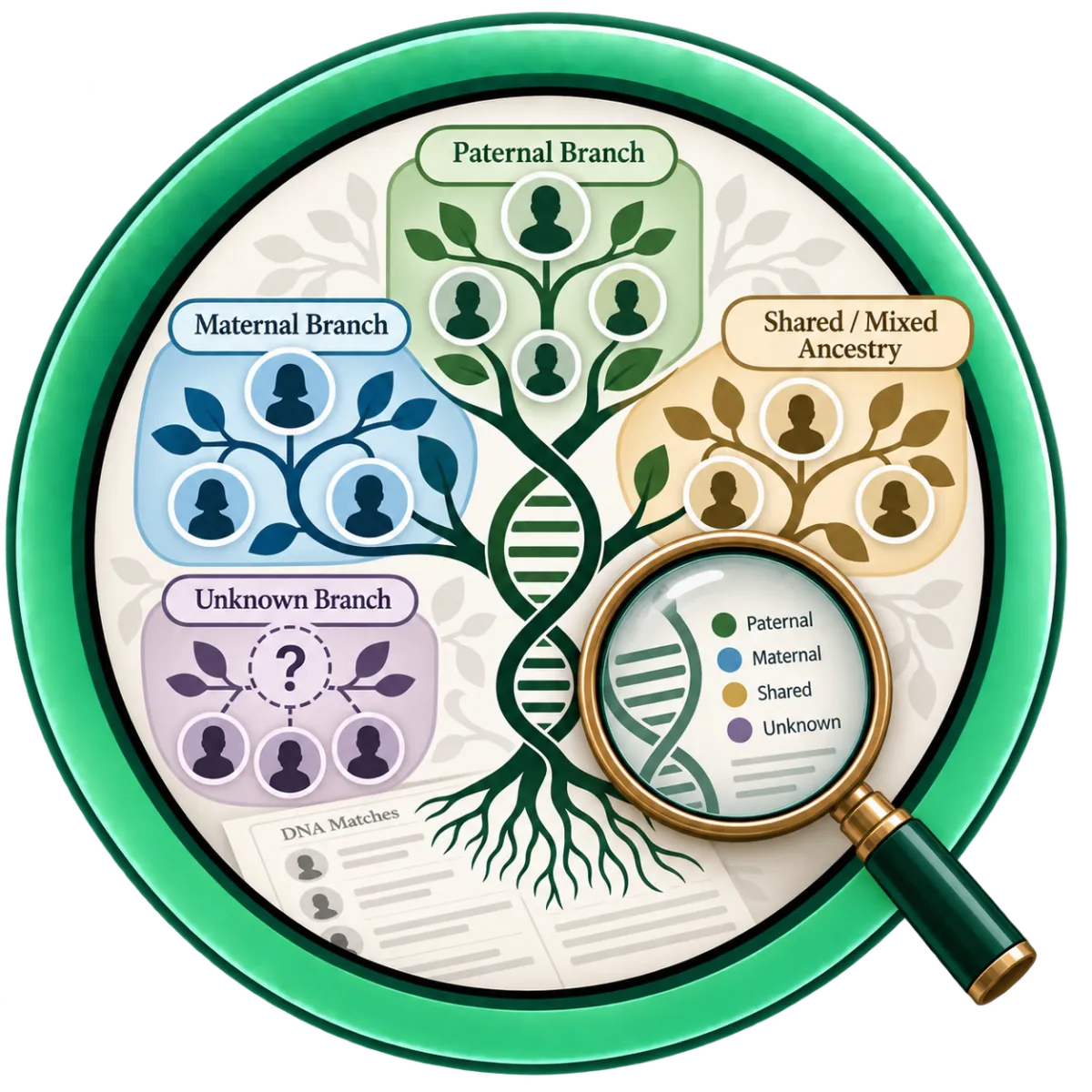
Grouping matches into family branches
I'll group related DNA matches to help identify which branches of your family they may belong to.
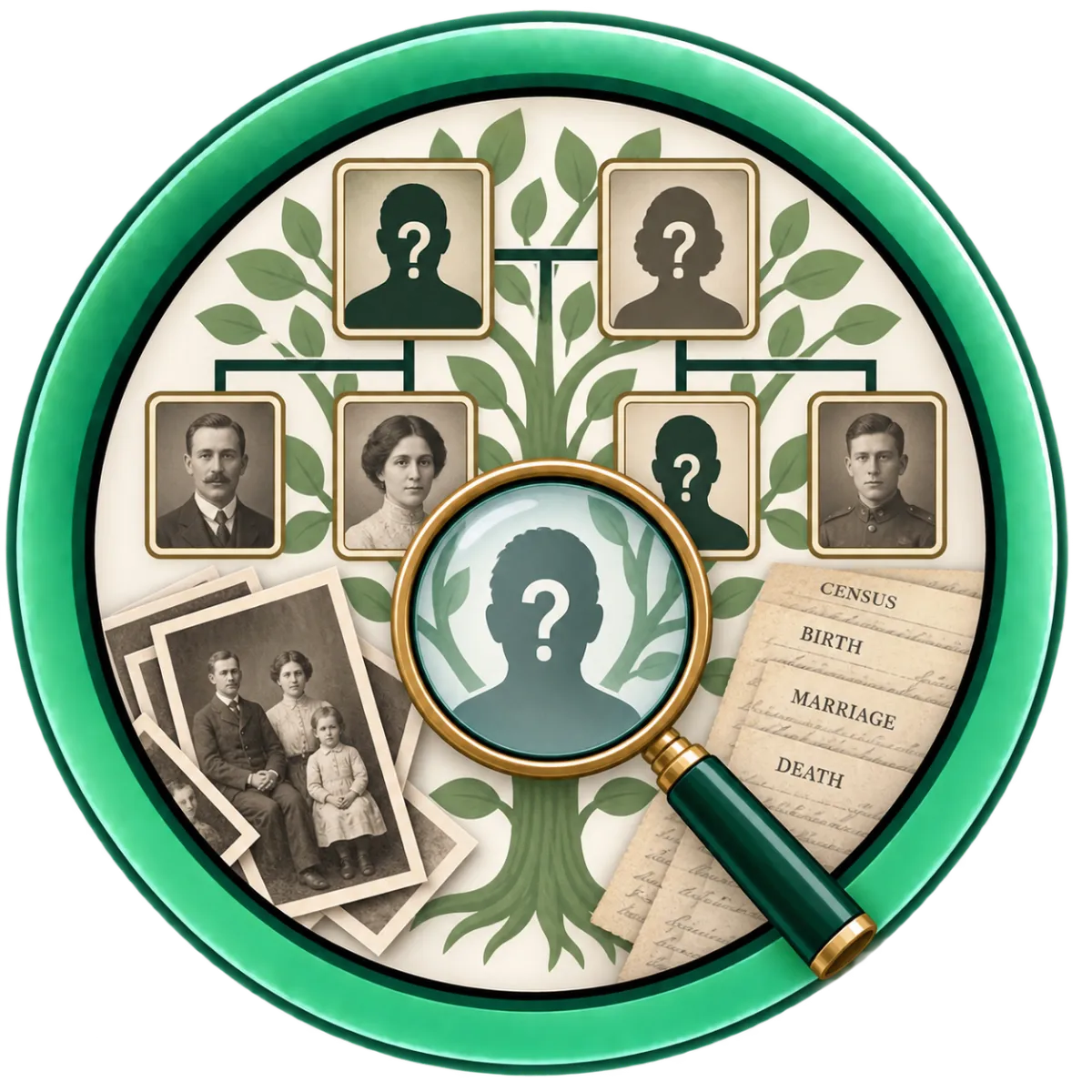
Identifying unknown ancestors
DNA evidence alongside family records can help investigate an unknown parent, grandparent or earlier ancestor.
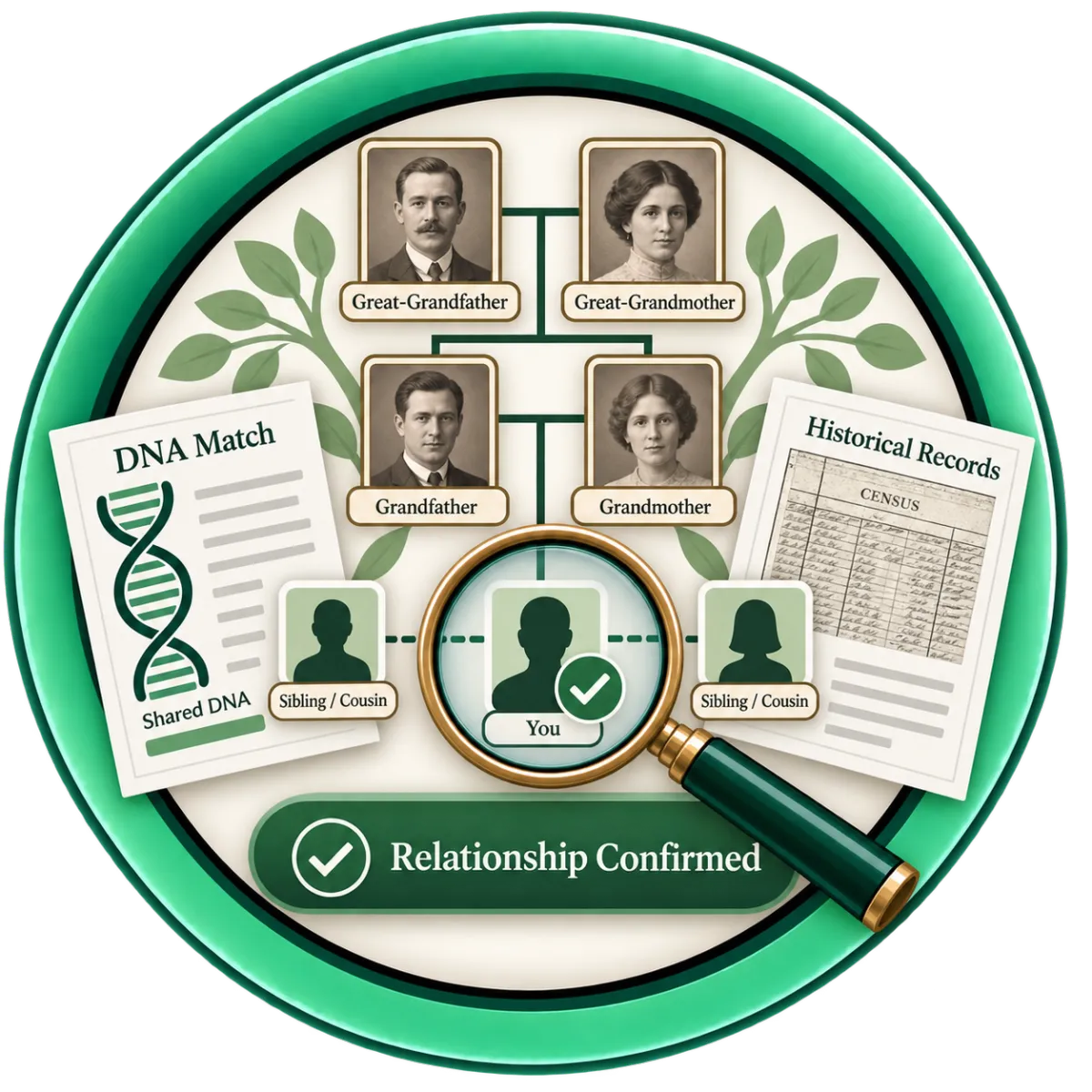
Investigating family relationships
I'll compare DNA evidence with documentary records to investigate possible relationships between people in your family tree.
UNDERSTANDING YOUR RESULTS
What Can DNA Tell You
About Your Family History?
DNA matches can connect you with people who share sections of DNA inherited from common ancestors. By comparing those matches with family trees, shared matches and traditional records, it may be possible to identify which part of your family a match belongs to.
This can be particularly useful when investigating unknown parents or grandparents, confirming that research is heading in the right direction, or looking for clues where the documentary trail has become difficult to follow.
DNA is evidence, but it works best when combined with records such as birth, marriage and death records, census returns, parish registers and other historical sources.
Use results you already have
You don't need to take another DNA test. If you've already tested, your existing results and DNA matches may provide useful clues about your family history.
AncestryDNA
MyHeritage
FamilyTreeDNA
Other recognised testing services
An honest approach to DNA
I won't promise that DNA will solve every family history mystery – no responsible researcher should. Instead, I'll use an evidence-based approach, combining your DNA matches with traditional documentary research and explaining the findings in plain English.
DNA is often most useful alongside historical records: supporting what the documents suggest, identifying possible family connections or revealing where further investigation is needed.
GETTING STARTED
Already Taken a DNA Test?
That's Enough to Begin.
Tell me which company you tested with, what you're hoping to discover and what you already know about the family line you're investigating.
You don't need to understand centimorgans, shared matches or DNA relationship estimates before getting in touch. That's the part I can help you make sense of.
COMMON QUESTIONS ABOUT DNA FAMILY HISTORY RESEARCH
Do I need to take a new DNA test?
No. If you've already tested with a recognised DNA testing service, I can work with the results and matches you already have.
Can you tell me how I'm related to a DNA match?
Sometimes the combination of shared DNA, shared matches, family trees and documentary records can help identify a likely relationship. Not every DNA match can be conclusively placed.
Can DNA help identify an unknown parent or grandparent?
DNA matches can provide important clues when investigating an unknown parent or grandparent. The available matches and documentary evidence will determine how far the investigation can go.
Can DNA help with a genealogy brick wall?
Yes, in some cases. DNA can provide another line of evidence when traditional records haven't resolved a family relationship.
Do you perform DNA tests?
No. I don't take DNA samples or carry out laboratory testing. I help you understand and research the DNA results you already have.
Will my DNA results definitely solve my family history mystery?
No. DNA research depends on the matches available, their relationships, the information they provide and the surviving documentary evidence. I'll explain what the evidence supports and where uncertainty remains.
READY TO BEGIN
Ready to make sense of your DNA?
Tell me which testing service you used and what you're trying to discover. I'll explain what's possible before any work begins.
See all services →
RESEARCH SERVICES
Help at every stage of your
family history
From professional family tree research and DNA analysis to checking an existing online tree or photographing an ancestral home, choose the family history service that best fits what you're trying to discover.
Digital Family Tree Research
Verified family trees, GEDCOM files & organised record folders.
Genealogy Brickwall Research
Fresh eyes and a structured plan for research you're stuck on.
DNA Family History Research
Make sense of DNA matches and connect them to your tree.
Ancestor Location Photography
Photographs of the homes, graves and places your family knew.
Historical Record & Handwriting Help
Reading old handwriting and interpreting records you have.
Online Family Tree Review & Tidy-Up
Review and tidy your existing family tree, identify errors and improve its accuracy
Origin
Family History Research
Professional genealogy research from Lincolnshire, helping clients across the UK and overseas discover the stories hidden in their family's past.
Lincoln, Lincolnshire, East Midlands, United Kingdom
Ready to begin?
Tell me what you're trying to discover. I'll review the information and let you know what research is possible before any work begins.
© 2026 Origin Family History Research. All rights reserved.
Lincoln, Lincolnshire, East Midlands, United Kingdom. Digital family history research for clients across the UK and overseas.