What Should I Expect When Hiring a Genealogist?
Hiring a genealogist can feel a little mysterious if you’ve never done it before. Many people start researching their family history themselves and then reach a point where they realise, they need help, perhaps they’ve hit a brick wall, discovered conflicting information, or simply don’t have the time to continue the search.
At Origin Family History Research, we work with people at all stages of their genealogy journey. Some are complete beginners just starting their family tree, while others have spent years researching but need professional help to move forward.
If you’re considering hiring a genealogist, here’s what you can realistically expect.
1. An Initial Conversation About What You Already Know
The first step is always understanding what information you already have.
Clients often come to us with a mixture of:
Names and dates written down by relatives
Old family stories
Birth, marriage, or death certificates
Photographs or family documents
A partially completed online family tree
Even small details can be useful. Something as simple as a nickname, a rough location, or a family rumour can sometimes provide the clue needed to move research forward.
During this stage we review the information together and identify what is confirmed fact, what needs verification, and where further research is needed.
2. A Clear Research Plan
Professional genealogical research is not just about searching names online.
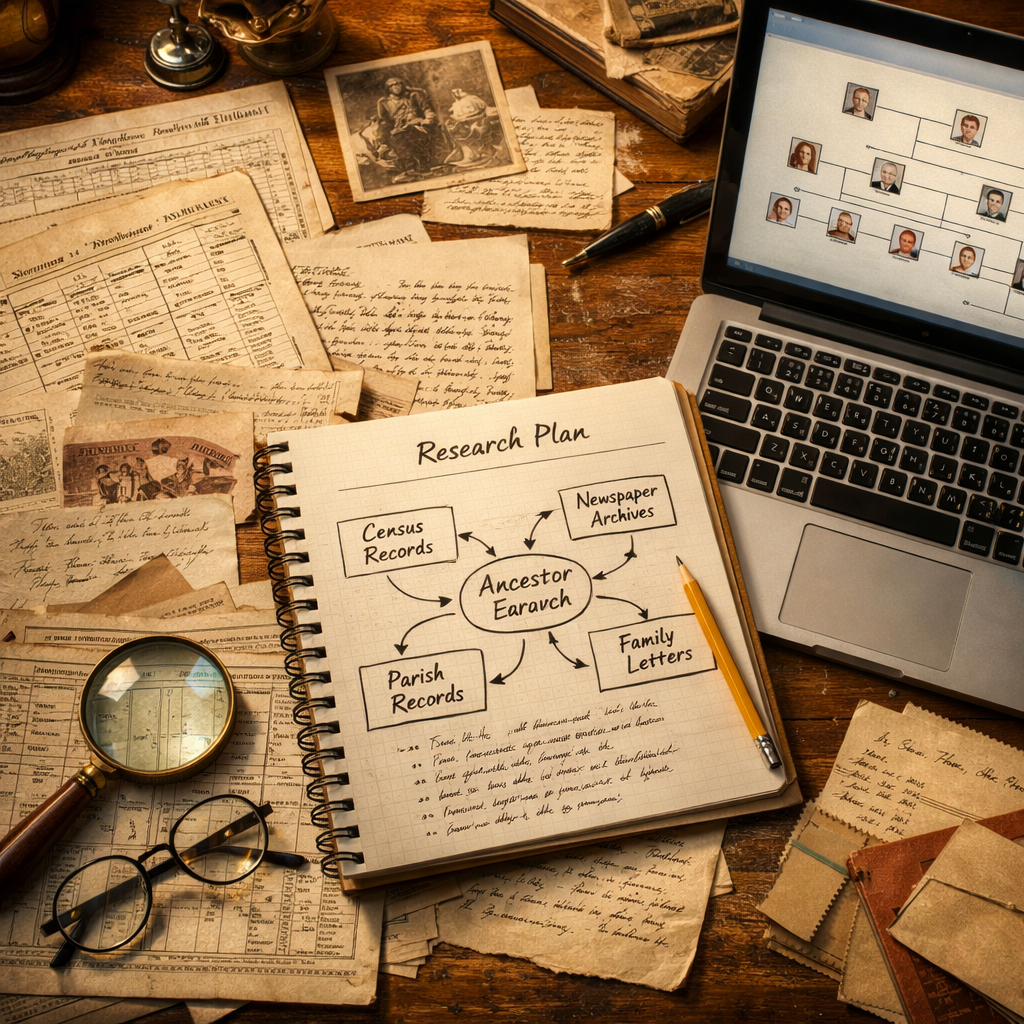
Once we understand the starting point, we develop a research plan which may involve:
Civil registration records (births, marriages, deaths)
Census records
Parish registers
Newspaper archives
Local historical archives
Military records
Immigration or travel records
DNA testing when appropriate
Often several different record sets must be cross-referenced to build a reliable picture of a family.
3. Verifying Information (Not Just Accepting Online Trees)
One of the biggest misconceptions in family history research is assuming that online family trees must be correct.
In reality, many trees are copied from one another without proper verification. This can spread errors across thousands of online trees.
A professional genealogist approaches research differently. At Origin Family History Research, we often work by trying to disprove a connection first. If a link between two individuals cannot be disproven through records and evidence, then it becomes much stronger.
This method helps ensure that the family tree we build is based on evidence rather than assumptions.
4. Access to More Research Sources
Many people assume everything is available online. While the internet has made research much easier, a large amount of historical material still exists in:
Local archives
Historical societies
Newspaper collections
Physical parish registers
Specialist genealogy databases
Professional researchers are familiar with multiple databases and resources, and we often search across several platforms to cross-reference results.
Sometimes the key piece of information is found in an unexpected place.
5. DNA Research When Traditional Records Fail
Occasionally traditional records simply do not exist — particularly when researching unknown parents or adoption cases.
In these situations, DNA testing can become an essential tool.
One of the most rewarding cases we worked on involved an 87-year-old client who wanted to know who her birth father was. Her birth certificate listed no father and she had never been given any information about him.
The only realistic route forward was DNA.
With the client’s permission we arranged for an AncestryDNA test and managed the results. We also uploaded the raw DNA data to additional platforms including GEDmatch and FamilyTreeDNA, allowing us to widen the pool of potential matches.
The results produced hundreds of DNA matches at varying levels of cousin relationships across the world. The challenge was determining which side of the family these matches came from.
Fortunately, the client’s nephew had also tested with AncestryDNA. This allowed us to identify and eliminate all matches connected to the maternal side of the family.
What remained were previously unknown paternal matches.
By analysing the strongest DNA matches and building family trees for those individuals, we discovered that several of the closest matches all traced back to the same surname and common ancestor.
From there we worked forward through the descendants of that ancestor until we identified three brothers who could potentially have been the client’s father.
Further research revealed that one of the brothers had later lived in the same city and even the same area as the client’s mother.
After careful contact with the family of that individual, we learned something remarkable: the man was known within the family to have fathered a child outside of his marriage.
A DNA test with a potential sibling eventually confirmed the relationship.
At the age of 87 our client discovered she had:
A previously unknown sister
Two nieces
A nephew
And later, through further DNA matches, another niece and extended family
For her, the discovery of her father’s identity and meeting new family members was an incredibly emotional moment.
Cases like this show how genealogy sometimes becomes part history, part detective work.
6. A Structured and Organised Family Record
When a project is completed, clients receive far more than just a list of names.
Depending on the project, the results may include:
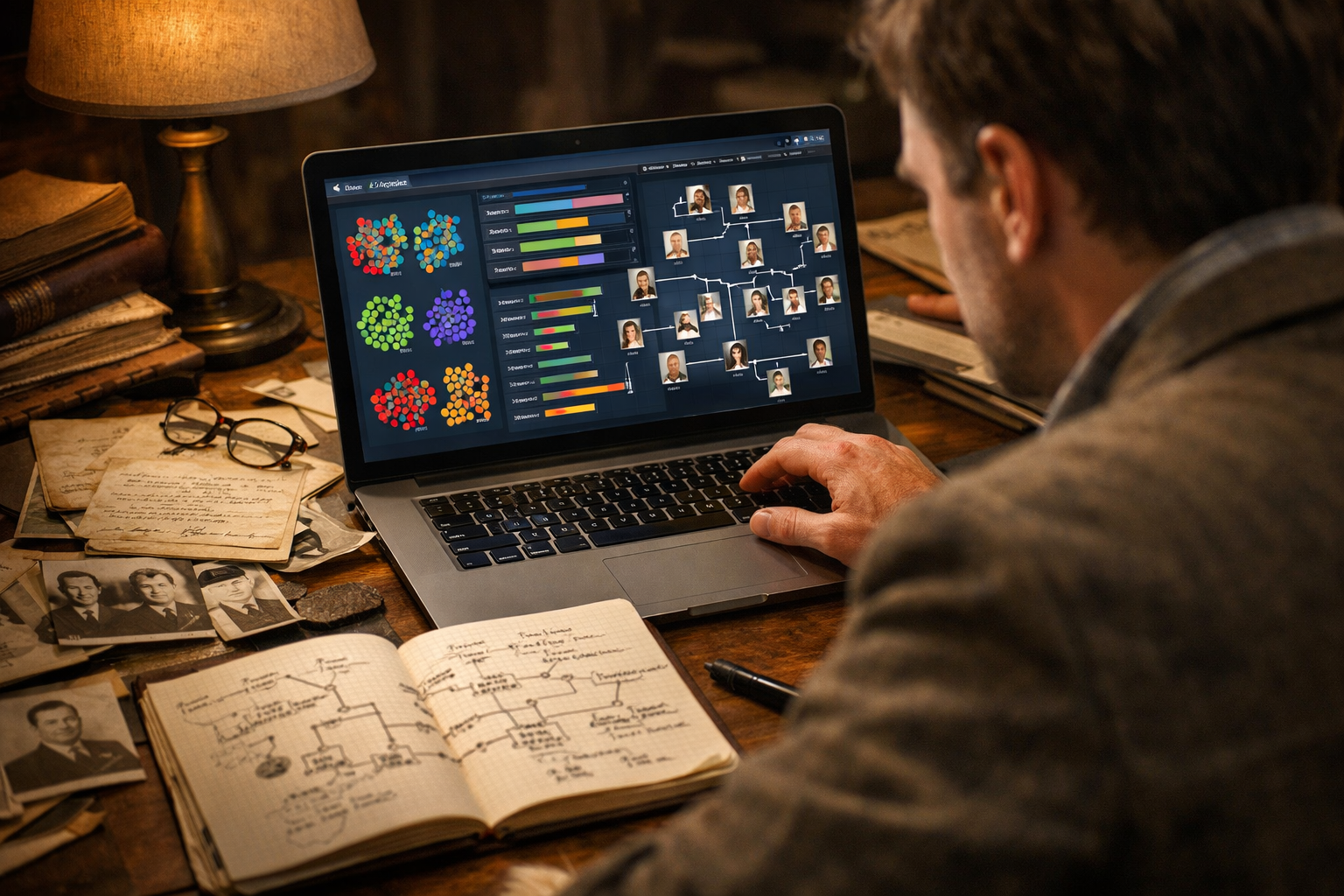
A fully documented family tree
A GEDCOM file that can be imported into genealogy software or sites like Ancestry
Digital copies of historical records such as birth, marriage and death certificates
Census records and supporting documents
Newspaper clippings
Organised files in PDF or image format for each ancestor
Clients may also receive the original physical documents if they have been purchased during the research process.
For larger family trees, we can also arrange for professionally printed and framed family trees, turning the research into something that can be displayed and shared with future generations.
7. Realistic Expectations
Another important thing to understand when hiring a genealogist is that not every question can always be answered.
Historical records may be missing, destroyed, or never created in the first place.
However, professional research significantly increases the chances of finding answers because it combines:
Multiple record sources
Careful evidence analysis
Cross-referencing information
Experience recognising patterns in historical records
Even when a complete answer cannot be found, genealogical research often uncovers fascinating stories about the lives of ancestors.
8. How You Can Prepare Before Hiring a Genealogist
If you are considering hiring a professional genealogist, there are a few things you can do to help the research begin more smoothly:
Speak with older relatives and record their memories
Gather old family documents and photographs
Write down names, nicknames, and locations you have heard mentioned
Collect any certificates or records already in the family
Even small clues can sometimes unlock a much larger story.
Discovering Your Family Story
Family history research is about more than just names and dates. It’s about understanding where we come from and preserving those stories for future generations.
Sometimes the journey is straightforward. Other times it requires patience, detective work, and a bit of luck.
But when a missing ancestor is finally identified, or a long-standing family mystery is solved, the results can be incredibly meaningful.
If you’re curious about your own family history or have reached a brick wall in your research, working with a professional genealogist can help uncover the stories waiting to be found.
